Tour 2026 stage 11: Wærenskjold wins the fastest Tour stage ever — from dead last to first in 24 hours
An average of 50.9 kph: Mario Cipollini's 27-year-old speed record fell in Nevers. And the man who won the fastest Tour stage ever had finished dead last only a day earlier. The story of Søren Wærenskjold, Pogačar's Bastille Day solo and the standings at the halfway mark.
First, Tuesday: Pogačar does Pogačar things on quatorze juillet
Two racing days after the rest day, two completely different stories. Start with Tuesday's restart, which was predictable and painful at once. In the Bastille Day stage to Le Lioran (166.6 km) a thirty-man break — featuring Mathieu van der Poel, Ben O'Connor and Kévin Vauquelin, among others — was never allowed more than a minute and a half, with UAE cracking the whip from kilometre zero. Richard Carapaz had a go on the Pas de Peyrol and took thirty seconds, but everyone watching knew what was coming: Tadej Pogačar jumped in the final kilometre of the Col de Pertus, swept up Carapaz on the descent and soloed to his third stage win of this Tour — exactly as we feared on Monday.
Remco Evenepoel sprinted to second at 32 seconds, ahead of home favourite Paul Seixas. The statistics are getting absurd: it was Pogačar's 24th Tour stage win and his third on quatorze juillet, after the Col du Portet in 2021 and Plateau de Beille in 2024 — no other rider has ever won three on France's national holiday. More important for the GC: Jonas Vingegaard was distanced in the final metres and lost 44 seconds plus the bonuses, while Isaac del Toro cracked completely out of the chasing group. From third place to seventh — the podium battle has suddenly been blown wide open.
Wednesday: 50.9 kph — Cipollini's record falls
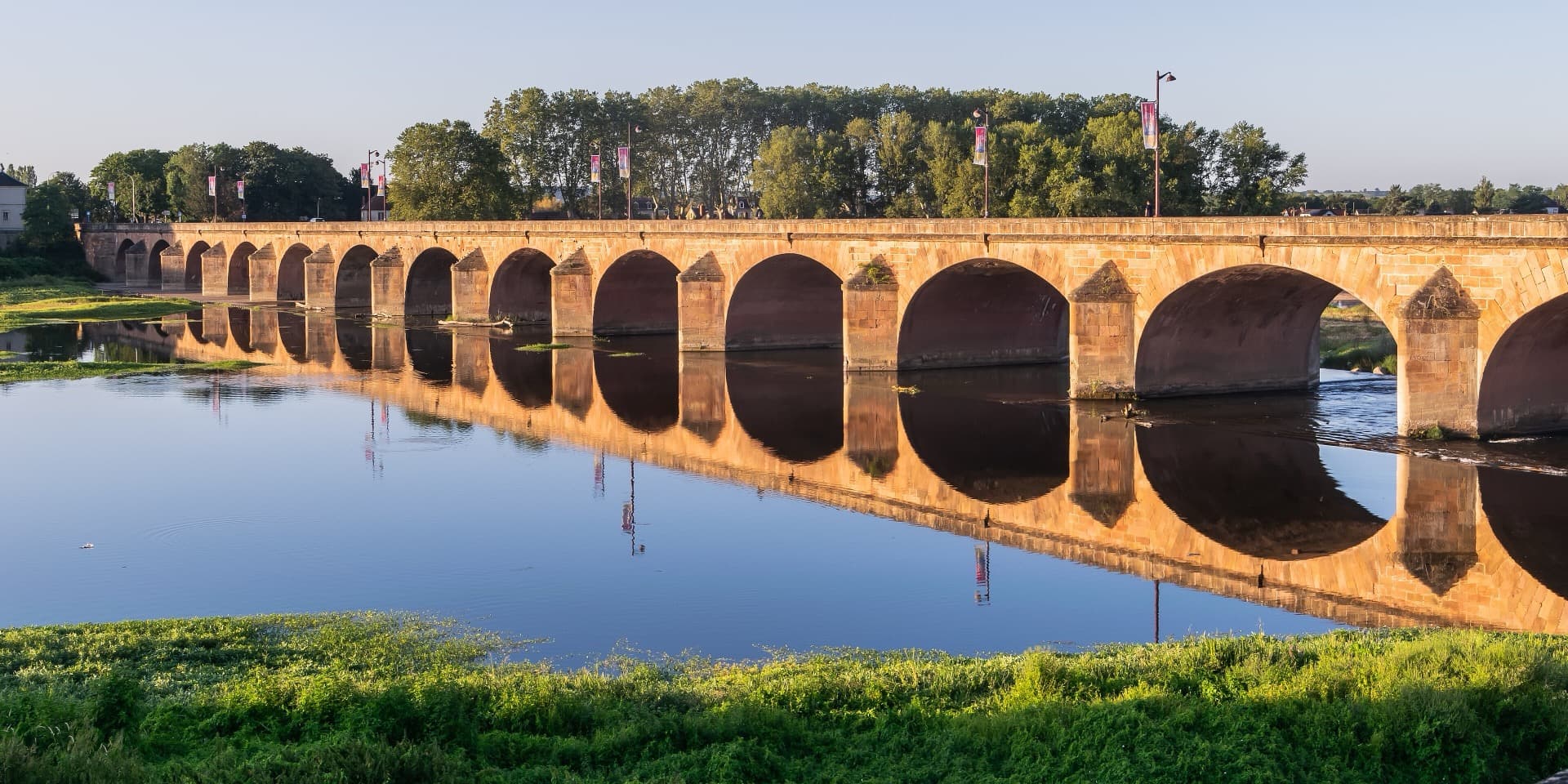
Then came Wednesday, on paper the dullest day of the week: 161.3 flat kilometres from Vichy to Nevers. It turned into the fastest road stage in 113 editions of the Tour de France. Four men — Julian Alaphilippe, Mathis Le Berre, Nelson Oliveira and Anthon Charmig — slipped away after thirteen kilometres but were never given more than 1'40". Behind them the peloton, driven by sprint teams that can smell their very last chances this week, simply never eased off. The result: an average of 50.9 kilometres per hour, wet early roads included. The old record — 50.3 kph, set by Mario Cipollini between Laval and Blois in 1999 — had stood for 27 years.
It didn't come entirely free of damage. Ben O'Connor, Abel Balderstone and Georg Zimmermann hit the deck in the feed zone (all three continued), Chris Harper abandoned with a hand injury from Tuesday's stage, and afterwards the peloton openly asked whether a finale at these speeds is still defensible — "very sketchy" was the summary doing the rounds. Alaphilippe had to let his fellow escapees go on the Côte de Billy-Chevannes; the last three survivors were caught five kilometres from the line. And that's when it really started.
Wærenskjold: from dead last to first in 24 hours
On Tuesday, Søren Wærenskjold crossed the line dead last on Le Lioran after a crash. On Wednesday he flagged down the race doctor mid-stage to look at his right hand. And on Wednesday evening he stood on the top step in Nevers. The sprint itself was pure chaos: NSN wound up their train far too early, after which Jonas Abrahamsen delivered his fellow Norwegian perfectly inside the final kilometre. Wærenskjold opened up from 300 metres out — far too early, by every textbook — but a gap appeared on the right "that's usually never there", and nobody could come around. Olav Kooij, the winner in Pau, had to settle for second and Jasper Philipsen took third — first relegated by the jury, then reinstated later in the evening.
"Sometimes I have really good confidence, but there are many, many times where I feel super tired and it seems impossible to win here," the Norwegian admitted afterwards. It reminded him of his first big win at Omloop Het Nieuwsblad. For Uno-X it is more than a stage win: a week after the Torstein Træen fairy tale ended in the medical truck, the Norwegian team has its first Tour victory of 2026. And Tim Merlier? He was hunting a hat-trick after his double in Bordeaux and Bergerac, but his train stalled in the scramble and he didn't even make the top ten. Wærenskjold, second behind him in Bordeaux, struck when it mattered.
The standings: 3'36" — and five men within 50 seconds of the podium
The damage from Le Lioran, in numbers. Pogačar now leads Vingegaard by 3'36" and Evenepoel by 4'06" — the gap that stood at 2'42" after the Tourmalet keeps creeping up. Behind them it's elbows out for the final podium spot: Juan Ayuso sits fourth at 4'22", Seixas fifth at 4'35", Florian Lipowitz sixth at 4'44" and the deflated Del Toro seventh at 5'08". Mattias Skjelmose (5'45") and Lenny Martinez (6'34") complete the top nine, with Tom Pidcock a distant tenth.
In the points classification Mads Pedersen stays comfortably in green, even though the sprinters helped themselves in Nevers. For his chasers the maths is simple: after Thursday, points only come from intermediate sprints and hilly finishes — Pedersen country. So today it's now or never.
Today: Magny-Cours, the very last chance for the fast men
Today the Tour rolls out from the Magny-Cours Formula 1 circuit for 179.1 kilometres to Châlon-sur-Saône — and that really is it, the last pancake-flat day of this Tour. After this come the Jura, the Vosges and two ascents of Alpe d'Huez. Merlier wants revenge, Philipsen still hasn't won, Kooij keeps knocking on the door and Wærenskjold suddenly has nothing left to lose. If the sprint teams drive it as hard as they did yesterday, that brand-new record might live a very short life.
Meanwhile: can you still name every winner of this Tour, from Barcelona to Nevers? Test yourself with the Big Rest Day Quiz — and don't worry, stage 11 isn't in it yet, so your excuse is ready-made.
Curious which rider you are?
🚴 Take the quiz