Tour de France 2026 recap: Pogačar takes his fifth, Van der Poel steals Paris
Ten stages, one abandon that changed everything and a climbing record that had stood for 31 years. From Merlier's revenge in Chalon-sur-Saône to the wildfire-shortened finale on Montmartre: the full story of Tour weeks two and three, plus every final classification and jersey of the 2026 Tour de France.
Merlier gets his revenge — and the speed record lasts two days
We ended our previous report by noting that the brand-new speed record set in Nevers might live a very short life. That turned out to be an understatement. First Tim Merlier settled his score in Chalon-sur-Saône: after the botched sprint in Nevers, Soudal Quick-Step rode a flawless finale and the Belgian took his third stage win of this Tour. The last pancake-flat day, the last bunch sprint — it all added up.
Then came stage 13, at 205.8 kilometres from Dole to Belfort the longest day of this Tour. A huge breakaway was given free rein, a brisk tailwind did the rest, and even the Ballon d'Alsace in the final forty kilometres barely slowed things down: an average of 51.45 kilometres per hour. Wærenskjold's record, set two days earlier, was already history. Mauro Schmid outduelled Harold Tejada in a two-up sprint beneath the Lion of Belfort to give Jayco AlUla the win; Tom Pidcock took third at two seconds and climbed to fourth overall.
Plateau de Solaison: the bend that changed the shape of the Tour
In the Vosges on Saturday, Tadej Pogačar did what he has patented this Tour. Stage 14 from Mulhouse to Le Markstein measured just 155.3 kilometres but packed in around 3,800 metres of climbing across the Grand Ballon, the Col du Page, the Ballon d'Alsace and finally the Col du Haag. That's where he went, and nobody came back: Isaac del Toro sprinted to second at 38 seconds, ahead of Paul Seixas and Jonas Vingegaard. It was Pogačar's fourth stage win of this Tour and his 25th in total.
Sunday was supposed to be Vingegaard's day — the summit finish at Plateau de Solaison, eleven kilometres of climbing after 183.9 kilometres of racing, had been circled in red in Visma's road book. Instead it became the day this Tour changed shape for good. Twenty kilometres from the line the Dane's front wheel slipped away in a bend and he hit the deck, together with team-mate Sepp Kuss and Del Toro among others. Vingegaard got up, but his Tour was over: a fractured collarbone, surgery required, abandoning while sitting second overall. At the top of the climb Remco Evenepoel won the sprint from Pogačar and Del Toro — his first Tour road stage victory — and moved up to second. Del Toro moved to third.
The Évian time trial: Evenepoel supreme, Lipowitz down
After the second rest day came the individual time trial along Lake Geneva: 26.1 kilometres from Évian-les-Bains to Thonon-les-Bains. Evenepoel did what Evenepoel does against the clock — 32'19" on the clock, an average of 48.4 kilometres per hour, and a second stage win in two days of racing. Pogačar came home 28 seconds down, with Mattias Skjelmose third at 1'04".
At Red Bull–BORA–hansgrohe the joy was complete and shattered at once. A few minutes before Evenepoel crossed the line, team-mate Florian Lipowitz slid out six kilometres from the finish on the white paint of a pedestrian crossing in a tight right-hander. He slammed into the protective padding and also caught a concrete kerb. The diagnosis: broken collarbone, Tour over — and he had been on course for a stage podium, three seconds behind Skjelmose at the final time check. Two GC riders from the top ten, two broken collarbones, two days apart.
Philipsen finally, and Carapaz starts his week
Stage 17 to Voiron produced the story Alpecin–Premier Tech had been waiting three weeks for. Out of a forty-rider breakaway, Mathieu van der Poel delivered his team-mate the way only he can, and Jasper Philipsen finally got his arms up: his first stage win of this Tour, after a run of seconds and thirds that had started to grate.
A day later, Richard Carapaz's week began. On the summit finish at Orcières-Merlette the Ecuadorian soloed to victory — and, strikingly, it was the first mountain stage of this Tour not won by a GC rider. UAE let the break go; Carapaz had understood exactly that the mountains jersey was there to be won in those final days.
Alpe d'Huez, twice: Pantani's record and Kuss's crash
And then the Alpe d'Huez double, the idea this Tour had been famous for since the route presentation. Friday brought the short version: 127.9 kilometres from Gap to the twenty-one hairpins. With twelve kilometres to go Pogačar was more than three minutes down on the break. He attacked on the first bend of the Alpe, caught Carapaz and Lenny Martinez with a kilometre and a half remaining and rode solo to his fifth stage win of this Tour. Martinez was second at six seconds, Carapaz third at nine.
The numbers behind it are even more striking than the pictures. Pogačar climbed the 13.8 kilometres of Alpe d'Huez in 35'27", wiping out Marco Pantani's 1995 record of 36'50" — a time that had stood for 31 years, and which he beat by more than a minute. On top of that he became only the second rider ever to win a stage on the Alpe in the yellow jersey, after Geraint Thomas in 2018.
Saturday brought the real queen stage: 170.9 kilometres with 5,450 metres of climbing over the Col de la Croix de Fer, the Col du Galibier and the Col de Sarenne, again finishing at the top. This time the break did survive, and it produced one of the cruellest finales of this Tour. Sepp Kuss started the final descent first with fifteen seconds on Carapaz, only to hit the tarmac just after a tunnel. He got up, rode on — and moments later went down again, missing a ravine by inches. Carapaz swept past, took his second win in two days and locked up the polka-dot jersey. Nothing moved on GC.
Paris: 89 kilometres because of the wildfires, and then Van der Poel
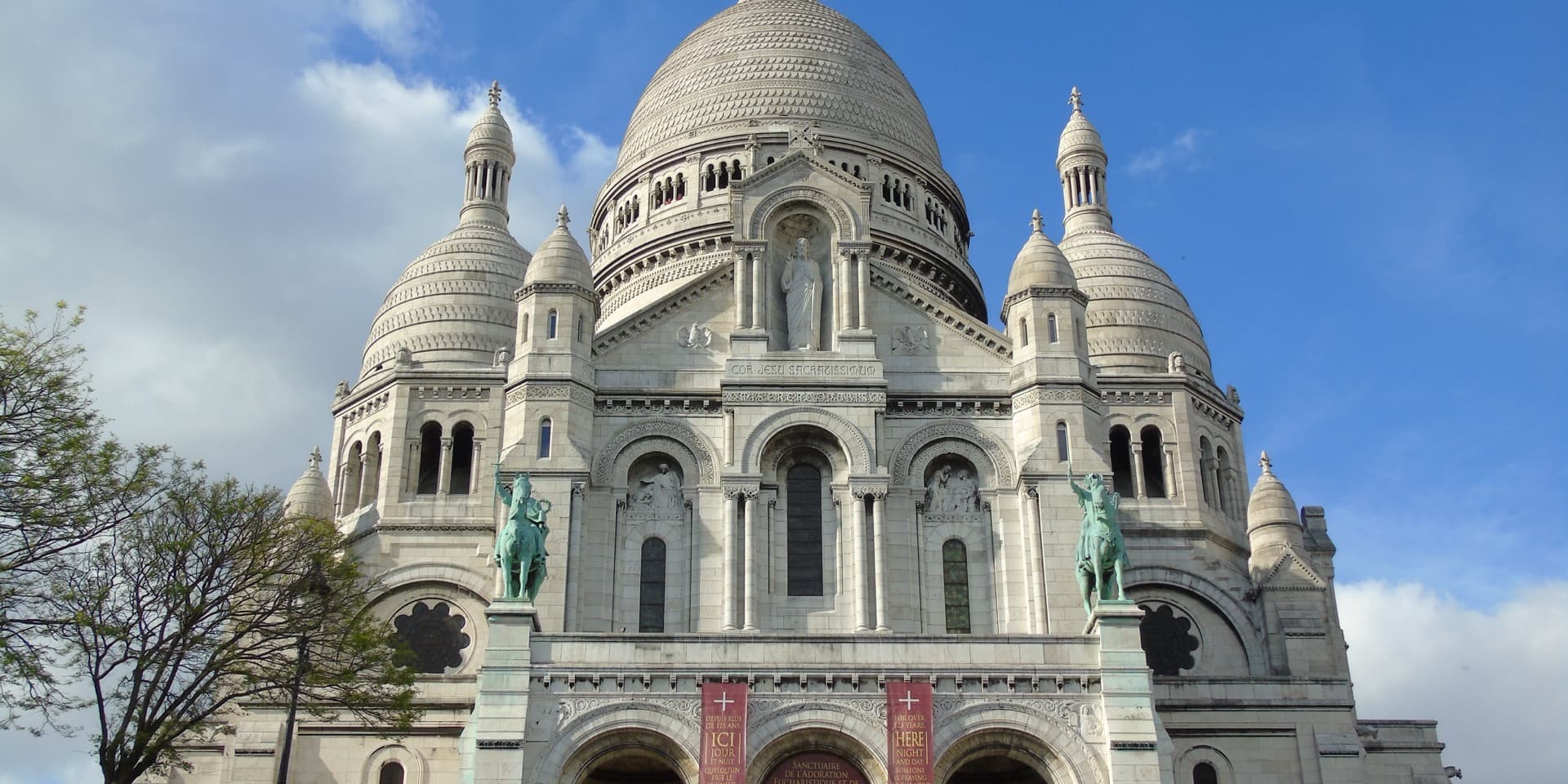
The final day got a completely new route twenty-four hours in advance. Because of the wildfires burning across large parts of France this summer — with the Gironde the worst affected — the Interior Ministry pulled police away from the race. The consequence: the 133 kilometres from Thoiry to Paris were scrapped and replaced by an 89-kilometre city stage entirely inside the ring road. The team presentation still took place in Thoiry, after which the riders travelled into the capital by bus. Six laps of the Champs-Élysées, then three ascents of Montmartre, and back to the Champs for the finish. GC times were taken with 41 kilometres to go.
On the wet cobbles of the rue Lepic it became exactly the race the organisers have been hoping for since 2025. Pogačar tested things on the second ascent, and on the third only Van der Poel could hold his wheel when the Dutchman kicked four hundred metres from the top. The pair dived into the descent towards the Champs-Élysées with the bunch in sight but never quite close enough. Inside the final five hundred metres Van der Poel put in one more surge and held off the onrushing sprinters: victory in Paris, his second of this Tour after Ussel. Philipsen took second, and the yellow jersey rolled home behind them, well satisfied.
The final standings: five for Pogačar, and a podium nobody predicted
Tadej Pogačar won the 2026 Tour de France in 73h56'26", by 6'26" from Remco Evenepoel and 9'42" from Isaac del Toro. It is his fifth overall win, putting him alongside Jacques Anquetil, Eddy Merckx, Bernard Hinault and Miguel Induráin — the most exclusive club in cycling history. He wore yellow from the Tourmalet on stage 6 all the way to Paris, won five stages and now stands on 26 Tour stage victories.
Behind him, a podium nobody had written down on the first rest day. Evenepoel, still more than four minutes back after the Tourmalet and seemingly out of belief himself, rode his best-ever Grand Tour and took two stage wins. Del Toro finished third on his Tour debut and won the white jersey too — not bad for a rider who had slipped to seventh after the stage to Le Lioran. The rest of the top eight: Paul Seixas at 11'56", Lenny Martinez at 13'02", Mattias Skjelmose at 14'59", Juan Ayuso at 17'48" and Richard Carapaz at 20'00".
The jerseys: yellow for Pogačar, green for Mads Pedersen with 539 points — exactly as our green jersey analysis suspected — polka dots for Carapaz with 156 points, white for Del Toro. Lidl-Trek won the teams classification, and Carapaz walked off with the super-combativity award as well: two stage wins, the mountains jersey, the red number and eighth overall. The rider who squeezed the most out of his three weeks may well have been the Ecuadorian.
What sticks — and how much of it do you remember?
Three weeks, and a story that snapped in half at the midpoint. Up to Plateau de Solaison this Tour was about Pogačar versus Vingegaard; after it, it was about how big the gap would get and who was still allowed to fight for the podium. What sticks are the extremes: 51.45 kilometres per hour between Dole and Belfort, 35'27" on Alpe d'Huez, a heat-shortened stage cut by thirty kilometres, a final stage cut by forty-four, and a Norwegian who went from dead last to winner in twenty-four hours.
Can you still tell the whole story? Test yourself with the big final quiz on the 2026 Tour de France — twelve questions across all three weeks, from Barcelona to Montmartre. And if you'd rather warm up first: the rest day quiz on week one is still there.
Curious which rider you are?
🚴 Take the quiz